
What Pages Every Small Business Website Needs (and Why They Matter)
Category: Website Design Basics
Posted by Local Reach Web Design - April 15, 2026
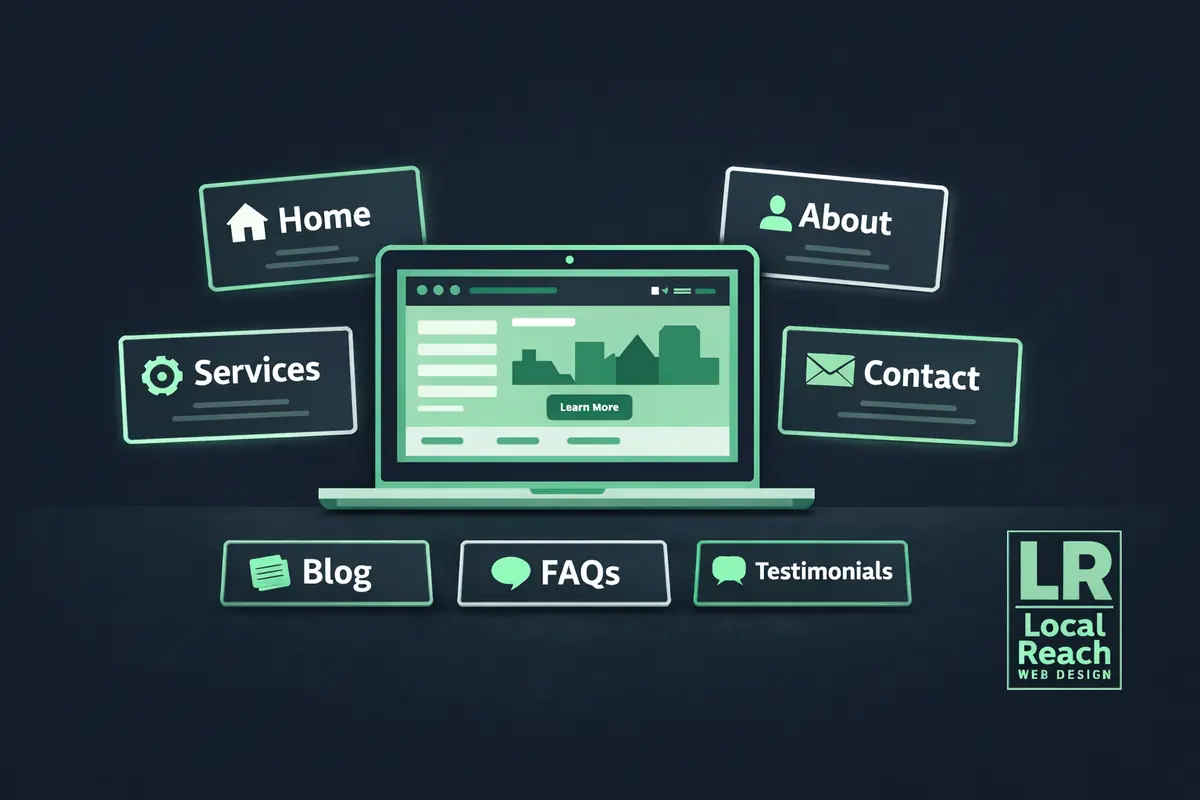
When small business owners start planning a website, one of the first questions is usually about design. What should it look like? What colors should it use? What should go on the homepage? Those are important questions, but before design comes structure. Knowing the pages every small business website needs helps create a site that feels clear, trustworthy, and easy to use.
A well-structured website does more than fill space online. It guides visitors, answers questions, builds confidence, and supports conversions. It also affects future design choices, user experience, and SEO readiness. That is why understanding the pages every small business website needs is one of the best starting points for a business website project.
Why Website Structure Matters From the Start
The page structure of a website shapes how people move through it. If visitors land on your site and cannot quickly figure out who you help, what you offer, or how to contact you, they are more likely to leave. Strong structure helps prevent that.
The pages every small business website needs are not just about having "enough" content. They are about giving people the right information in the right order. A clear structure helps your website feel more professional, makes navigation easier, and reduces friction for potential customers.
It also helps when it comes to planning. If you know what pages are required, you can make better decisions about layout, menus, calls to action, content writing, and future updates. In other words, the pages every small business website needs influence much more than the sitemap. They shape the whole direction of the site.
One-Page vs. Multi-Page Websites: Which One Makes Sense?
Not every small business needs the same type of website. In some cases, a one-page site makes sense. In others, a multi-page build is the better choice.
A one-page website keeps everything on a single page. Visitors scroll through sections for the business overview, services, about information, and contact details. This can work well for a very simple business, a brand-new company with a limited budget, or a business that only offers one core service. If the goal is to launch quickly with a clean online presence, a one-page site can be a practical option.
That said, one-page websites have limits. They leave less room to explain services in detail, organize information clearly, or expand over time. As a business grows, a one-page site can start to feel crowded or restrictive.
A multi-page website gives each major topic its own dedicated page. This usually creates a better experience for businesses that offer multiple services, want to build credibility, or plan to grow their visibility online. When you start thinking about the pages every small business website needs, a multi-page structure is often the better long-term solution because it gives the business more room to communicate clearly.
The Core Pages Every Small Business Website Needs
No matter the industry, there are a few foundational pages that show up again and again because they serve clear business purposes. These are the pages every small business website needs to create a strong base.
Home Page
The home page is usually the first impression. It should quickly explain what the business does, who it helps, and what action the visitor should take next.
A strong home page does not try to say everything at once. Instead, it introduces the business, points visitors toward the most important information, and builds enough confidence to keep them moving through the site. It should include clear messaging, thoughtful calls to action, and a layout that supports quick understanding.
About Page
The about page helps people trust the business behind the website. Small businesses often win customers through personality, credibility, and real human connection. The about page is where that comes through.
This page can explain who started the business, why it exists, what values guide it, or what experience supports it. For many visitors, this is the page that makes the business feel legitimate and approachable. Among the pages every small business website needs, this is one of the most important for building trust.
Services or Products Page
Your services or products page should clearly explain what you offer. It helps visitors decide whether your business is the right fit before they ever send a message.
For service businesses, this page can break down different offerings, explain what is included, and set expectations. For product businesses, it can organize categories and make it easier for customers to browse. This page is especially important because it turns general interest into informed interest.
Contact Page
A contact page should be built for conversion, not just as a form sitting at the end of the site. It should make it easy for a visitor to take the next step.
That may include a contact form, phone number, email address, service area, office hours, or a note about response times. The goal is to make the business feel easy to reach and easy to work with. When thinking about the pages every small business website needs, the contact page is where trust should turn into action.
Optional Pages That Add Long-Term Value
Some pages are not required on every website at launch, but they can add real value over time depending on the business.
Blog
A blog can support authority, education, and long-term SEO readiness. It gives a business space to answer common questions, explain its process, and publish useful content for potential customers. Not every small business needs a blog on day one, but many benefit from adding one later.
Testimonials
Testimonials help reduce hesitation. Reviews, client feedback, and success stories can reassure visitors that other people had a good experience with your business. In some cases, testimonials can live on the homepage. In others, they deserve their own page.
FAQ Page
An FAQ page can answer common concerns before a customer has to ask. It can cover topics like timelines, service areas, process, pricing approach, or what to expect after reaching out. This improves usability and can save time for both the customer and the business.
Privacy and Legal Basics
Even small websites should include privacy and legal basics where appropriate. A privacy policy is often a smart foundation, especially if the site uses forms, analytics, or marketing tools. These pages also help the site feel more complete and credible.
How the Right Pages Support Design, UX, and SEO Readiness
The pages every small business website needs are closely tied to design, user experience, and SEO readiness. Design works best when the content structure is clear. UX improves when visitors can move naturally from one page to the next. As Google's SEO Starter Guide explains, good site organization helps search engines understand your content and helps users find the right pages. SEO readiness improves when a site has organized topics, focused content, and room to grow.
This does not mean every website needs dozens of pages. It means the right pages should exist for the right reasons. A thoughtful structure makes it easier to build a site that feels intentional instead of random.
Setting the Right Scope for Your Website Project
One reason the pages every small business website needs matter so much is that they help set realistic project scope. A one-page site is usually faster and simpler. A multi-page site often requires more planning, content, and strategy.
That is not a bad thing. It just means page count affects time, budget, and complexity. Choosing the right structure early helps avoid confusion later and leads to a website that fits the business more accurately.
Final Thoughts
The pages every small business website needs are not about adding unnecessary complexity. They are about building a website that is clear, credible, and useful. Whether your business needs a streamlined one-page site or a more detailed multi-page build, the right structure makes everything stronger.
When the right pages are in place, your website can make a better first impression, guide visitors more effectively, support future growth, and create a better foundation for design, UX, and SEO readiness.
Choosing the right website structure can feel overwhelming, especially when you are trying to balance budget, goals, and future growth. At Local Reach Web Design, we help small businesses make smart website decisions from the beginning, whether that means a simple one-page site or a more strategic multi-page build.
Reach out today to request a quote and get a website plan that fits your business.